
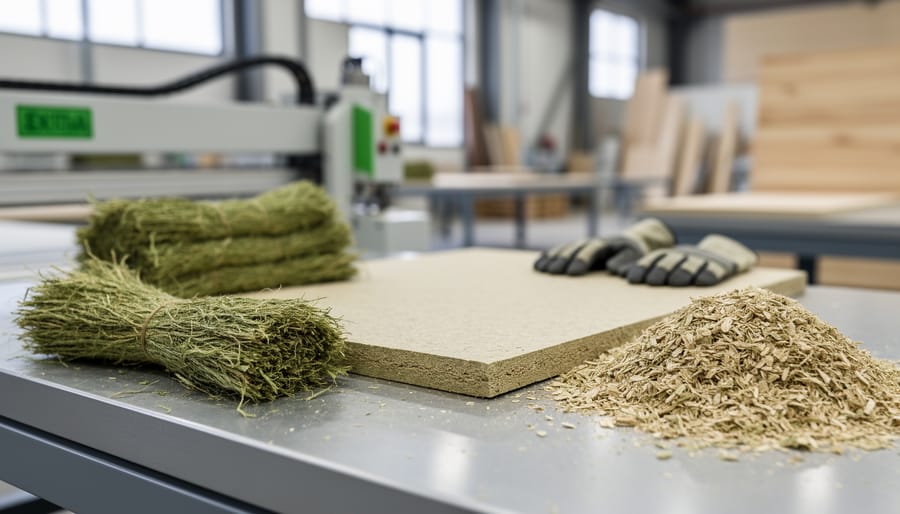
Hemp is rapidly transforming Canada’s industrial landscape, moving far beyond its agricultural roots to become a versatile raw material driving innovation across manufacturing, construction, and textiles. As one of the world’s leading hemp producers, Canada exported over 84,000 tonnes in 2025, with domestic processing capacity expanding to meet growing demand from industries seeking sustainable alternatives to conventional materials.
The plant’s remarkable versatility stems from its distinct components. Hemp fiber, extracted from the stalk, produces materials stronger than cotton and more durable than many synthetic alternatives. The woody core, or hurd, serves as the foundation for bio-based building materials and animal bedding. Hemp seeds yield protein-rich food products and oils for cosmetics and industrial applications. This multi-use potential creates economic opportunities across rural Canada, where farmers are diversifying crops and processors are establishing facilities from Manitoba to Quebec.
Canadian manufacturers are scaling up production of hemp-based products at an unprecedented rate in 2026. Construction companies are incorporating hempcrete, a carbon-negative building material, into residential and commercial projects. Textile mills are weaving hemp fiber into clothing, upholstery, and technical fabrics. Automotive manufacturers are using hemp composites for interior panels, reducing vehicle weight while improving sustainability profiles.
The sector’s growth reflects broader shifts in consumer preferences and regulatory frameworks. Federal investment in hemp processing infrastructure has reached $47 million since 2024, supporting equipment upgrades and research into new applications. This expansion positions Canada to capture a larger share of the global hemp market, projected to exceed $26 billion by 2027.
The Current State of Industrial Hemp Production in Canada
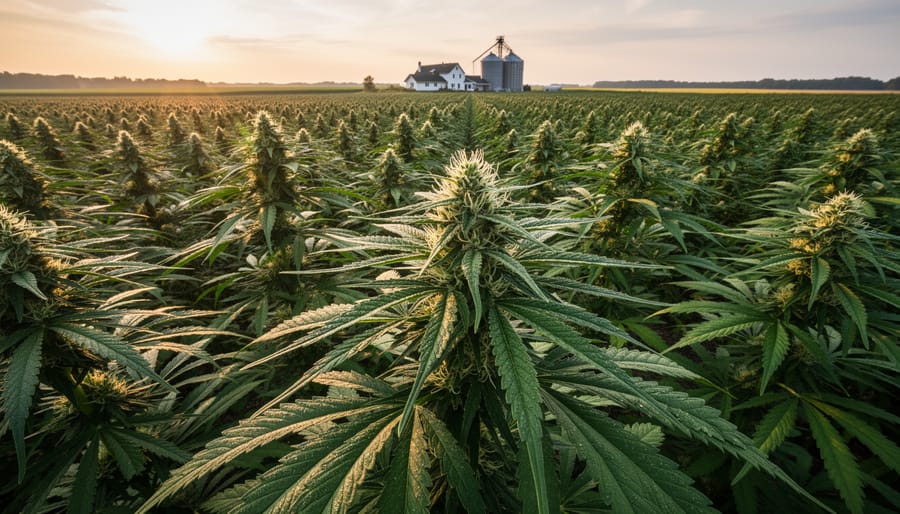
Canada has positioned itself as one of the world’s leading industrial hemp producers, with cultivation expanding significantly since full legalization in 2018. The country’s established agricultural infrastructure, combined with supportive regulatory frameworks at both federal and provincial levels, has enabled farmers to integrate hemp into crop rotation systems across multiple regions.
In 2026, Canadian farmers cultivated approximately 84,000 acres of industrial hemp, representing modest growth from previous years as the market stabilizes and processors develop capacity. Production volumes reached roughly 140,000 tonnes of raw hemp biomass, with the majority destined for seed and fiber processing facilities concentrated in the prairie provinces. Saskatchewan leads national production with nearly 60 percent of total acreage, followed by Manitoba and Alberta, though Ontario and Quebec are emerging as significant growing regions as eastern processing infrastructure develops.
The regulatory environment governing industrial hemp has matured considerably. Health Canada oversees licensing for cultivation, with streamlined application processes that reduced administrative barriers for farmers. Plants must contain less than 0.3 percent THC, a threshold that ensures clear distinction from cannabis while allowing cultivation of productive hemp varieties. Provincial agricultural departments provide additional support through extension services and research programs focused on agronomic best practices specific to Canadian growing conditions.
Canada ranks among the top five global hemp producers, though China maintains dominant market share in fiber processing and European nations lead in finished product manufacturing. Canadian producers focus increasingly on value-added processing rather than exporting raw biomass, a strategic shift that captures more economic value domestically. Processing capacity remains the primary bottleneck limiting industry expansion, as farmers can grow hemp more readily than domestic facilities can transform it into industrial products.
Construction and Building Materials
Hempcrete and the Green Building Movement
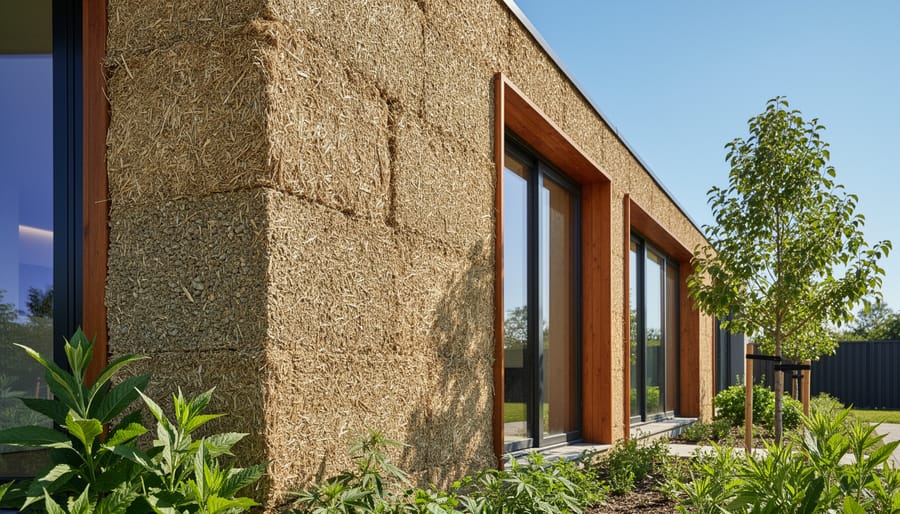
Hempcrete adoption in Canadian construction projects has accelerated considerably in 2026, driven by both environmental regulations and demand for sustainable building materials. This biocomposite combines hemp hurds (the woody inner core of the hemp stalk) with lime binder to create a lightweight, insulating material that actively sequesters carbon dioxide as it cures. Each cubic meter of hempcrete can lock away approximately 110 kilograms of CO2, making buildings constructed with it carbon-negative over their lifecycle.
Several Canadian provinces now recognize hempcrete in building codes, removing a significant barrier that previously limited its commercial application. Ontario and British Columbia have seen the most construction activity, with residential projects and institutional buildings incorporating hempcrete walls. The material provides excellent thermal performance and moisture regulation, reducing long-term heating costs by 15 to 20 percent compared to conventional insulation systems.
For Canadian hemp farmers, hempcrete production creates a stable market for the stalk portion of the plant, which represents roughly 70 percent of the harvested crop by weight. With hempcrete selling for $150 to $200 per cubic meter, processing facilities near growing regions generate rural employment while keeping transportation costs manageable. Construction companies specializing in hempcrete installation report project backlogs extending into 2027, indicating robust market demand that benefits both agricultural producers and specialized contractors across the supply chain.
Insulation and Interior Products
Beyond hempcrete walls, Canadian builders are increasingly turning to hemp fiber for insulation batts and loose-fill products that compete directly with fibreglass and mineral wool. Hemp insulation offers comparable R-values while providing superior moisture management, the fibers absorb and release humidity without losing thermal performance or promoting mold growth, a critical advantage in Canada’s diverse climate zones.
Manitoba-based processors have developed hemp batt insulation that meets national building codes and sells at price points within 15-20% of conventional options. Contractors report easier installation compared to itchy fibreglass, reducing labor costs and job site complaints.
Interior applications extend to acoustic panels, where hemp’s natural sound-dampening properties prove valuable in commercial spaces and multi-unit residential buildings. Several Ontario manufacturers now produce hemp-based particleboard and medium-density fiberboard for cabinetry and furniture, capturing a small but growing share of the interior finishing market.
The economic opportunity lies in regional processing facilities that can serve local construction markets, reducing transportation costs while supporting agricultural communities transitioning from traditional crops.
Textiles and Fiber Products
Hemp fiber has emerged as a compelling alternative to cotton and synthetic materials in Canada’s textile sector, offering manufacturers a domestically-grown resource with lower environmental impact. Canadian textile producers are increasingly incorporating hemp into product lines ranging from everyday apparel to specialized industrial applications, creating new market opportunities across the supply chain.
The fiber’s natural properties make it particularly valuable for technical textiles. Hemp fibers are stronger and more durable than cotton, with natural antimicrobial qualities and excellent moisture-wicking capabilities. These characteristics have attracted Canadian outdoor apparel companies and workwear manufacturers seeking performance fabrics that can withstand harsh conditions. Several Quebec and British Columbia textile mills have invested in hemp processing equipment specifically to serve this growing demand.
In the apparel sector, Canadian fashion brands are blending hemp with organic cotton and other natural fibers to create comfortable, long-lasting garments. The fiber softens with each wash while maintaining structural integrity, addressing earlier consumer concerns about hemp’s coarse texture. This has opened mainstream market segments beyond the niche eco-conscious consumer base.
Industrial textile applications represent perhaps the largest economic opportunity. Hemp rope and cordage offer superior strength-to-weight ratios compared to synthetic alternatives, appealing to marine and agricultural industries. Geotextiles for erosion control, shade fabrics for greenhouses, and heavy-duty canvas for commercial use are all areas where Canadian manufacturers are establishing production capacity.
The economic impact extends beyond finished products. Processing facilities that transform raw hemp stalks into cleaned, graded fiber create rural manufacturing jobs typically paying above minimum wage. Alberta and Saskatchewan have seen particular interest in establishing decortication facilities, which separate fiber from the woody core material. These processing operations provide year-round employment and establish value-added infrastructure that benefits local farming communities while reducing the country’s dependence on imported textile fibers.
Bioplastics and Composite Materials
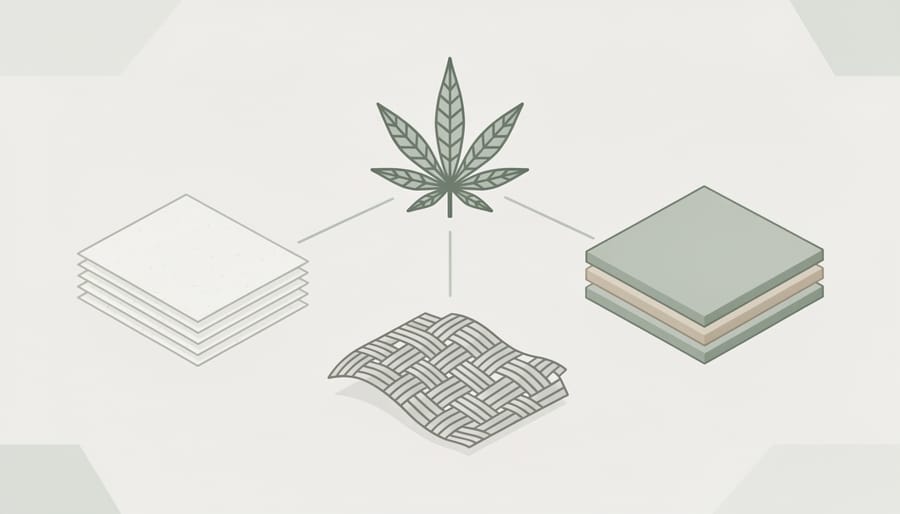
Hemp’s potential in bioplastics and composite materials represents a significant opportunity for Canadian manufacturers seeking sustainable alternatives to petroleum-based products. Hemp fiber’s high cellulose content makes it an excellent feedstock for biodegradable plastics that break down naturally without leaving microplastic residue in the environment.
| Material Type | Biodegradation Time | Tensile Strength | Carbon Footprint |
|---|---|---|---|
| Hemp Bioplastic | 3-6 months | 30-50 MPa | Low (carbon-negative) |
| Conventional Plastic | 400+ years | 50-80 MPa | High |
| Corn-based PLA | 6-12 months | 21-60 MPa | Moderate |
These properties have caught the attention of Canadian automotive manufacturers looking to reduce vehicle weight and environmental impact. Hemp composites are now being tested for door panels, dashboards, trunk linings, and structural components. The material’s strength-to-weight ratio rivals fiberglass while offering superior acoustic dampening properties and end-of-life biodegradability.
Several partnerships between prairie hemp processors and Ontario automotive suppliers have emerged in 2026. These collaborations focus on developing hemp-reinforced thermoplastics that meet automotive industry specifications for durability and safety while reducing reliance on imported petroleum products. One Saskatchewan processor signed a supply agreement with a major tier-one automotive supplier to provide hemp fiber for injection-molded interior components.
Beyond automotive applications, Canadian companies are exploring hemp composites for electronics casings, furniture, sporting goods, and consumer packaging. The challenge remains scaling production to achieve price parity with conventional materials, but growing demand for sustainable alternatives is making hemp composites increasingly economically viable for manufacturers committed to reducing their environmental footprint.
Paper and Pulp Products
Canada’s paper and pulp industry faces mounting pressure to reduce environmental impact, and hemp offers a compelling alternative feedstock. Hemp fiber can be processed into paper products ranging from specialty papers to packaging materials, potentially reducing the sector’s reliance on tree-based pulp.
Hemp stalks yield both long bast fibers and shorter hurd fibers, each suited to different paper applications. The bast fibers produce strong, durable paper ideal for currency, cigarette papers, and archival documents. Hemp’s naturally low lignin content, around 5-10% compared to wood’s 20-30%, means pulping requires fewer harsh chemicals and less energy. This translates to reduced processing costs and lower environmental impact.
Several Canadian companies have begun exploring hemp paper production for packaging applications. The corrugated cardboard and food packaging sectors show particular promise, as hemp-based materials meet strength requirements while appealing to sustainability-focused brands. Hemp paper’s superior tear resistance compared to conventional paper makes it especially suitable for high-durability applications.
However, infrastructure remains the critical bottleneck. Canada currently lacks dedicated hemp pulping facilities at commercial scale. Existing wood pulp mills cannot easily switch between feedstocks without modifications. Establishing processing capacity requires substantial capital investment, estimated at $50-100 million for a medium-scale facility.
The economic case strengthens as carbon pricing increases and brands prioritize sustainable packaging. Hemp paper production could support rural economies where pulp mills anchor communities, though the transition timeline depends on overcoming processing infrastructure challenges.
Biofuels and Energy Applications
Industrial hemp presents opportunities in Canada’s renewable energy sector, though its economic viability remains more complex than in construction or textile applications. Hemp seeds contain approximately 30 percent oil, which can be converted into biodiesel through standard transesterification processes. Several small-scale biodiesel operations in Alberta and Saskatchewan have experimented with hemp oil as a feedstock, blending it with other bio-oils to meet regional fuel standards.
The more established energy application involves using hemp biomass for pellet fuel and direct combustion. Hemp stalks, after fiber extraction, provide a cellulose-rich material that burns efficiently in industrial boilers and residential pellet stoves. Manitoba processors currently produce hemp biomass pellets that compete with wood pellets in heating applications, offering comparable BTU output per kilogram.
Hemp’s potential for cellulosic ethanol production exists theoretically, but no commercial-scale facilities operate in Canada as of 2026. The fermentation and distillation infrastructure required represents significant capital investment, and hemp would compete directly with agricultural waste streams that major ethanol producers already process at lower cost.
The economic challenge centers on scale and competition. While hemp grows quickly and requires minimal inputs, canola dominates Canadian biodiesel feedstock markets with established crushing facilities and supply chains. For energy applications to become economically significant contributors to industrial hemp demand, processing costs would need to drop substantially or carbon pricing mechanisms would need to make bio-based fuels considerably more competitive with petroleum products.
Economic Impact on Rural Communities
Industrial hemp cultivation is creating tangible economic opportunities across rural Canada, offering farmers and communities new revenue streams that complement traditional agriculture. Hemp generates approximately $300 to $500 per acre for farmers, comparable to wheat or canola but with shorter growing cycles and lower input costs. This makes it an attractive rotation crop that can help diversify farm income while improving soil health through its deep root system and natural pest resistance.
Processing facilities represent the most significant economic opportunity for rural areas. Decorticating plants, which separate hemp fiber from the woody core, require proximity to growing regions and create year-round employment. A medium-sized processing facility employing 15 to 25 workers can serve farms within a 100-kilometer radius, keeping value-added activity local rather than shipping raw materials to urban centers or overseas. Saskatchewan and Manitoba have seen several such facilities established between 2023 and 2026, with more planned as demand from construction and automotive sectors increases.
The economic multiplier effect extends beyond direct employment. Hemp farming requires specialized equipment that local dealers can service, and processing facilities need maintenance, logistics support, and professional services from accounting to quality testing. Communities that establish processing capacity attract secondary manufacturers producing insulation, composite materials, or textiles, creating industrial clusters that stabilize rural economies.
Challenges remain significant. Most Canadian hemp still gets exported as raw material because domestic processing capacity lags behind production. Farmers report difficulty securing long-term contracts, and processing equipment represents substantial capital investment. However, provincial programs in Alberta, Ontario, and Quebec now offer grants supporting hemp processing infrastructure, recognizing its potential to reverse rural depopulation and create manufacturing jobs outside major metropolitan areas.
Challenges Facing Industrial Hemp Expansion
Despite growing interest in industrial hemp, several substantial barriers continue to limit its economic expansion across Canada in 2026. These challenges affect everything from farm-gate production to final product manufacturing, and addressing them will require coordinated investment and policy action.
The most immediate obstacle remains processing infrastructure. While Canadian farmers can grow hemp successfully, the country lacks sufficient facilities to transform raw hemp into materials ready for manufacturing. Decorticating plants that separate fiber from the woody core remain scarce, particularly in regions outside Alberta and Saskatchewan. Without local processing capacity, farmers often ship raw hemp long distances or export it for processing abroad, both of which erode profit margins and eliminate potential manufacturing jobs within Canada.
Market development presents another significant hurdle. Established industries built around wood, cotton, petroleum-based plastics, and conventional construction materials benefit from decades of standardized practices, established supply chains, and buyer familiarity. Hemp-based alternatives must prove not just environmental credentials but also performance reliability and cost competitiveness. Convincing procurement officers, architects, and manufacturers to specify hemp materials requires extensive testing, certification, and relationship-building that takes years to establish.
Competition from synthetic materials and imported products further complicates market entry. Hemp textiles face price pressure from cheaper polyester and cotton imports, while hempcrete competes against subsidized conventional insulation products with lower upfront costs. Canadian hemp processors operate at smaller scales than global competitors, limiting their ability to offer competitive pricing.
Regulatory complexity, though improved since legalization, continues to create uncertainty. Provincial building codes remain inconsistent regarding hemp-based construction materials, requiring separate approvals in different jurisdictions. Financial institutions sometimes hesitate to fund hemp-related ventures due to lingering associations with cannabis, despite industrial hemp’s distinct legal status and negligible THC content.
The resurgence of industrial hemp in Canada represents more than a niche agricultural trend, it signals a tangible shift toward sustainable manufacturing practices across multiple sectors. From construction materials that sequester carbon to bioplastics replacing petroleum-based products, hemp’s versatility addresses both economic and environmental priorities that increasingly drive Canadian industrial policy in 2026.
The economic impact extends beyond the immediate value of hemp crops themselves. Processing facilities, research partnerships, and manufacturing integration create jobs in rural communities while diversifying income streams for farmers navigating climate challenges. As Canadian companies refine processing technologies and scale production, they position the country as a leader in bio-based materials, potentially capturing export markets as global demand for sustainable alternatives accelerates.
Realizing hemp’s full industrial potential requires sustained investment in infrastructure, continued regulatory clarity, and collaboration between farmers, processors, and manufacturers. The challenges are substantial, but the trajectory suggests hemp could contribute meaningfully to Canada’s transition toward a more sustainable manufacturing sector while strengthening rural economies.
The industrial hemp story is still being written, with new applications and partnerships emerging regularly. For readers interested in ongoing coverage of Canada’s evolving hemp industry and its economic implications, a subscription to our publication ensures access to in-depth analysis and updates as this sector continues to mature.